Vitlife

EVERY CHILD’S SUPERPOWER

Share this article →
 
 
Close

Search articles

Every Child’s Superpower

 Posted on 25th April 2026  4 minute read

When I first saw vitiligo on a child, it made me pause in a way I hadn’t before.

I had seen vitiligo on adults growing up, but watching it develop on my nephew, King, felt different. It made me consider the world through a child’s eyes and how children experience being “different”.

King’s mum mentioned that other children had started to notice the patches on his skin and asked questions. As children do, they were curious. It made me stop and wonder what that experience might feel like for him, and for other children like him.

King turned eight last March, and he is one of the most joyful, energetic children you could meet. He loves football, does gymnastics, especially tumbling and swims regularly. He’s quirky, boisterous, endlessly affectionate, and has the kindest heart. He’s also growing up in a beautifully blended cultural family and is bilingual, which makes it even more special to watch him learn and grow. Spend any time around him, and you quickly see his huge personality and natural confidence. But, seeing his vitiligo develop brought something else into focus something I’ve noticed many adults do.

Often, adults avoid talking about visible differences around children. They act as though ignoring it offers protection, as if pretending something isn’t there will make it easier. But that has never quite sat right with me. Children are incredibly perceptive. They notice everything. When we avoid acknowledging something that is clearly visible, it can unintentionally suggest that it is something negative or uncomfortable.

For me, true protection doesn’t come from pretending differences don’t exist. It comes from awareness, understanding, and learning to embrace them. That idea stayed with me.

I’ve always believed in trying to be the person you needed when you were younger. Representation matters especially for children. When they see characters who look like them, or share something of their experience, it helps them feel seen, understood, and proud of who they are.

Around the same time, I had written my first children’s book, My Happy Two Homes, which explores how children can feel safe, loved, and secure while navigating life between two homes. But even as I worked on that story, my mind kept returning to King.

I kept thinking about how powerful stories can be for children. A story can gently open conversations that might otherwise feel difficult. It can help children process emotions and experiences they don’t yet have the words for.

And that’s where the idea for King’s Superpower began.

It started as something deeply personal a gift for King’s eighth birthday, something he could hold onto as he grows older.

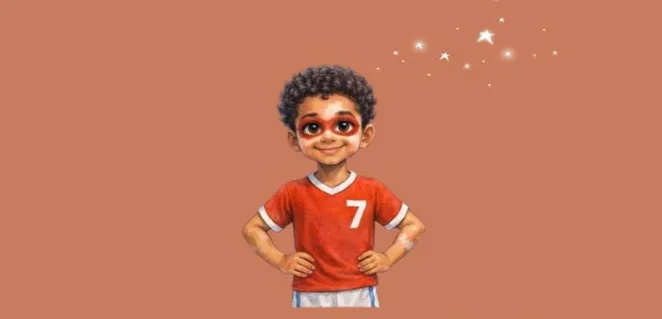
I wanted to create a story where a child with vitiligo isn’t defined by it where it is simply part of who he is. In the story, King discovers that what truly makes him powerful isn’t how he looks, but who he is: his kindness, his confidence, and his heart.

I wanted the message to feel gentle and natural, not heavy, not overly serious. Children’s stories have a unique way of communicating big ideas through simple moments. Sometimes a child can understand something more deeply through a character than through direct explanation. For children with vitiligo, I hope the story helps them feel proud of their skin and confident in themselves. For children who don’t have vitiligo, I hope it encourages kindness, curiosity, and understanding when they meet someone who looks different.

King really loved the book and now believes he’s “famous” and helping other children like him, which has been lovely to see. He was especially excited seeing the illustrations of himself, particularly the one of him singing with a microphone — that was his favourite. It genuinely made him over the moon with excitement, and he kept saying how much it looked like him.  

He does understand that he has vitiligo. He’s shared that he doesn’t like having it at times, especially when it comes to applying his medication and sunscreen, and he can feel uncomfortable when people look at his skin or when other children comment on it. However, seeing himself reflected in the book and being part of the story really helped, it made him feel happier and more confident about it.  

Children are naturally open and accepting. Often, they just need a little help to understand. When differences are acknowledged openly and positively, they become far less intimidating. They become simply part of the beautiful variety that exists between us. That is the message I hoped to capture in King’s Superpower.

For me, this book was never just about vitiligo. It’s about helping children understand that everyone has something that makes them unique. And that uniqueness isn’t something to hide. It’s something to celebrate.

If this story helps even one child feel more confident, more understood, or more comfortable in their own skin, then it will have done exactly what I hoped it would.

And of course, King himself will always be the real superpower behind it all.

Please support our work! You've enjoyed 1 article this month and we hope you have found it useful. Our work is entirely funded by memberships and donations, so please consider joining our charity today and supporting our work.

Become a Member