

Who We Are
Our vitiligo charity mission and strategy are focused on supporting and empowering people living with vitiligo in the UK.
Since 1985, The Vitiligo Society has been the UK’s leading charity supporting people living with vitiligo. We work to combat the physical, psychological and social impact of vitiligo through advocacy, research, awareness and support. Guided by lived experience and evidence‑led insight, our mission and strategy focus on improving medical care, strengthening mental health support and driving social change—so that everyone affected by vitiligo feels informed, supported and empowered.
Our Charity Mission
The Vitiligo Society was established in 1985 and we support people living with vitiligo in the UK.
Our Mission is to combat the physical, psychological, and social effects of vitiligo by advocating for awareness, supporting research, and working towards effective treatments and a cure.
Our Vitiligo Strategy
In order to achieve our mission we focus on 3 priority areas of work which we feel represent us as a Society and what we need to do to best support and represent our community. They form the foundation of our strategy launched in 2025:
- Enhancing Medical Support
- Improving Mental Health Resources
- Fostering Social Change
Enhancing Medical Support
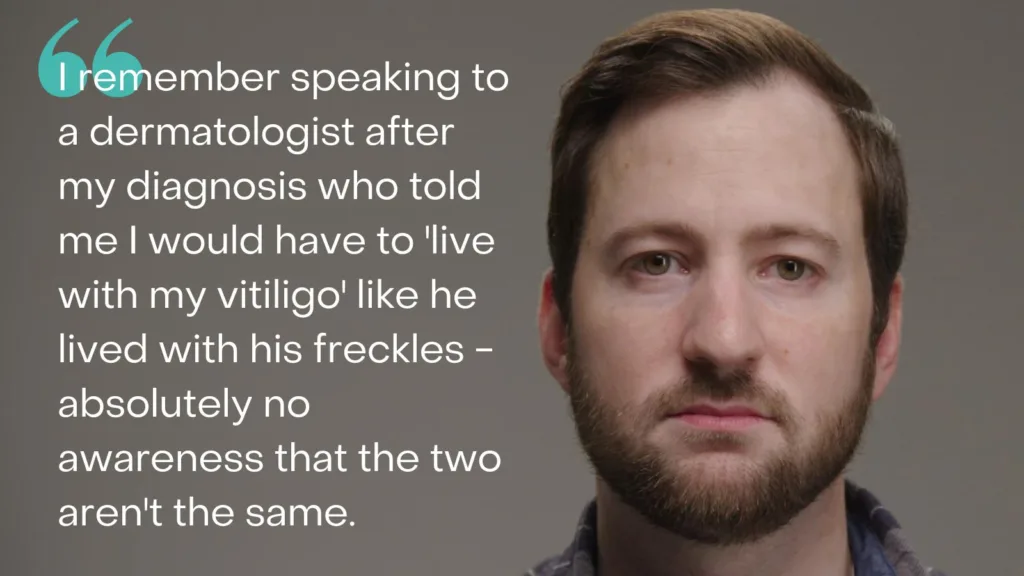
Speaking to a GP who knows much about vitiligo and is empathetic about the condition is hard enough, but when I got to that point in my teens, I was told rather bluntly that there was no cure
Diagnosis is often dismissive, inconsistent, and lacking in empathy. according to research, only 4% of people felt their concerns were acknowledged when they first sought help. Many were never referred to a dermatologist, while others were left to navigate unlicensed and confusing treatment options on their own.
We are responding by: Advocating for clear, standardised diagnosis and treatment pathways. Participating in NICE Technology Appraisals to ensure patient voices are heard when new treatments are considered. Developing a Patient Treatment Navigation Tool so that people know what options are available and how to access them. Championing equal access to newly licensed treatments, so no one is left behind.
Improving Mental Health Resources
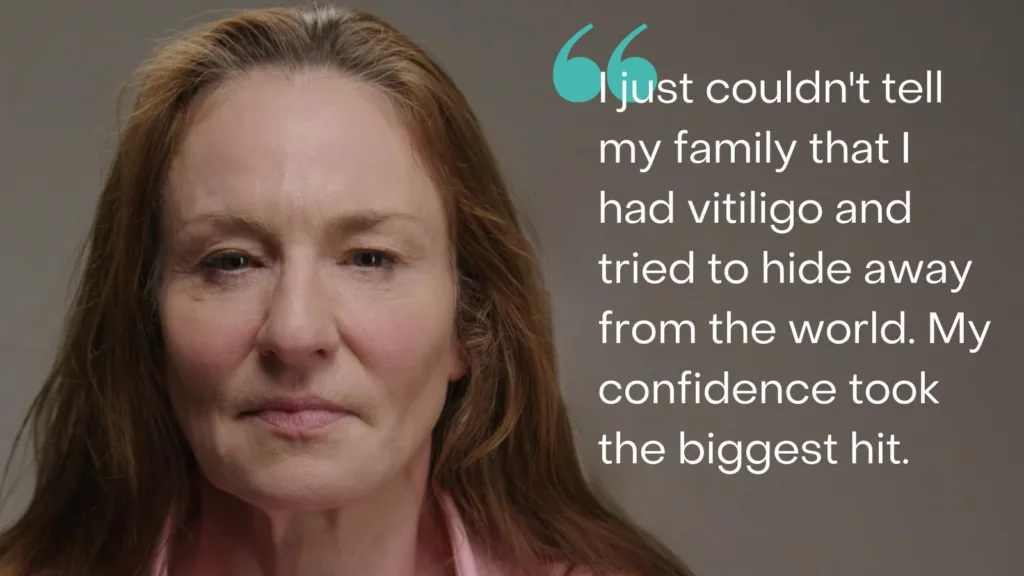
I used to hate thinking people were looking at me, so I always kept my head down.
The psychological toll of vitiligo came through powerfully in our 2024 research. 79% reported a negative impact on their appearance. 63% said they had experienced mental health challenges including stress, anxiety, and depression. 64% described feeling insecure or self-conscious.
To tackle this, we are investing in: Expanding peer support groups, both online and in-person. Creating age-specific and family programmes so that children, young people, and parents can feel supported. Developing referral networks with healthcare professionals, including psychodermatology and camouflage specialists. Delivering information webinars and resources so people can access trusted advice in a safe space. With these changes, we want to ensure that no one with vitiligo ever feels alone.
Fostering Social Change
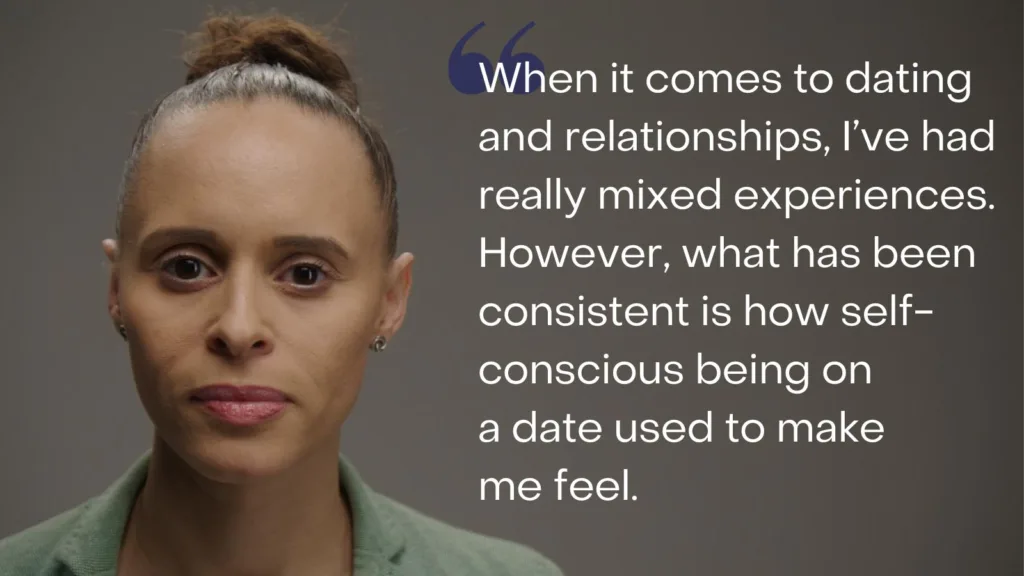
When it comes to dating and relationships, I’ve had really mixed experiences. What’s been consistent is how self-conscious being on a date used to make me feel.
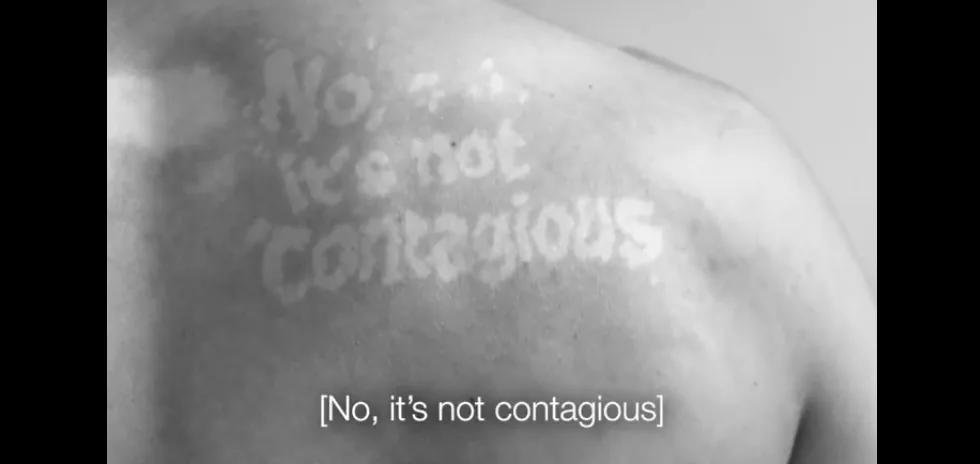
Vitiligo is not just a medical condition; it is also a social experience, shaped by visibility and representation. Our research showed that: 49% of people reported challenges in social interactions. 37% struggled in dating and intimate relationships. People from Black, Asian and culturally diverse backgrounds faced additional stigma and cultural barriers.
We are tackling stigma head-on with initiatives such as: A Representative Ambassador Programme, where people with vitiligo share their stories to change perceptions. National awareness campaigns like “More Than Meets the Eye” and “Let’s Talk Vitiligo”, reaching millions online and through the media. Dedicated projects to work with culturally diverse communities, co-producing resources that reflect real needs and lived experiences. By changing public attitudes, we can help every person with vitiligo feel visible, respected, and celebrated.
View the full Research Report and Strategic Plan.
Together, these priorities form the foundation of our vitiligo charity mission and strategy, guiding our work now and into the future.
 Support our mission by becoming a member
Our History
Founding and early years (1985–1997)
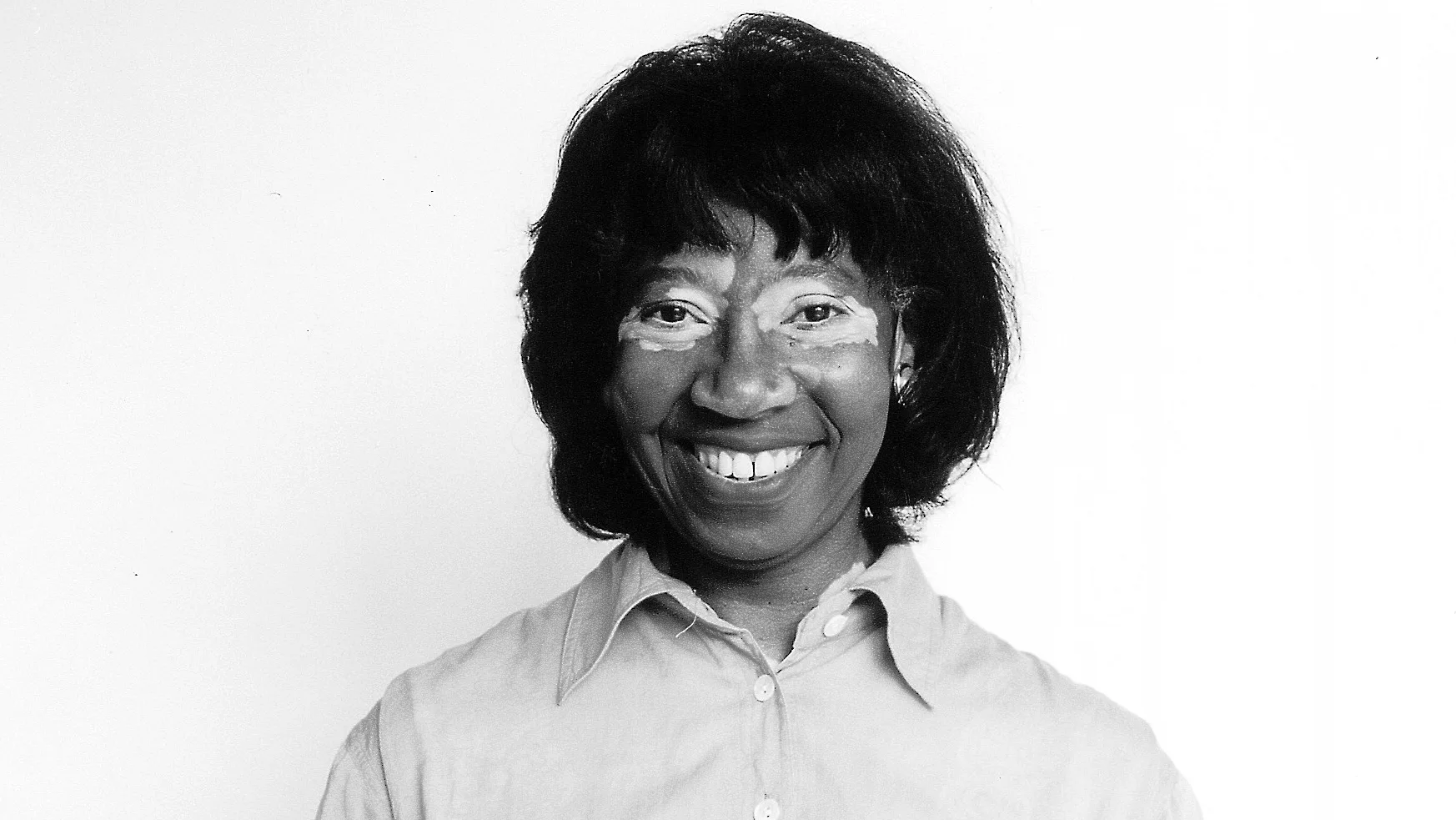
The Vitiligo Society was established in 1985 as the London Vitiligo Group and on 13 January 1986 was officially registered as a charity. The charity later changed its name to the Vitiligo Group before becoming The Vitiligo Society in 1990. Lead by the incredible Maxine Whitton (MBE) Our early work focused on providing reliable information about vitiligo, creating a support network for people experiencing isolation and stigma & raising awareness among healthcare professionals and the public. During this period, the Society operated as a voluntary organisation and laid the foundations for what would become a nationally recognised health charity.
Formalisation and charitable registration (1998)
In 1998, the organisation took a major governance step by registering as a charity with the UK Charity Commission. This enabled us to expand our activities, apply for charitable funding and establish a formal board of trustees to lead the organisation.
Growth of support, information and membership (2000s)
Through the late 1990s and 2000s we grew our member services, provided formalised advice and information services and establish volunteer-led support activity across the UK. Society representatives contributed to BAD‑linked research initiatives (e.g. the Vitiligo Priority Setting Partnership in 2009) alongside BAD, UKDCTN and other clinical bodies By this stage, the Society had positioned itself not only as the primary UK charity focused specifically on vitiligo education and support, the Society also increasingly engaged in international research and advocacy, ensuring the UK vitiligo community was represented in global discussions.

Strengthening the evidence base and medical engagement (2010s)
During the 2010s, the Society increasingly engaged with medical researchers, dermatology professionals & policy and healthcare discussions. This period culminated in the Society becoming a trusted partner in vitiligo‑related research, including participating in academic studies examining patient experiences in the UK.
Public awareness, research and campaigning impact (2020–2024)
One of the Society’s most significant achievements came with the “Let’s Talk Vitiligo” campaign. This involved Commissioning the largest UK survey of people living with vitiligo (1000+ respondents), generating national and regional media coverage and highlighting the mental health, social and healthcare barriers faced by the community.
Policy influence and treatment access (2024+)
Most recently, the Society has played a recognised role in NICE technology appraisals, representing patient voices in treatment decision‑making & supporting access to newly licensed therapies. In 2026, the Society publicly welcomed NICE guidance recommending ruxolitinib (Opzelura) for non‑segmental vitiligo, describing it as “a historic step forward” for the community, and one made possible thanks to our close working relationship with NHS England.
Together, our current work and history reflect our ongoing vitiligo charity mission and strategy, ensuring that support, research and advocacy remain led by the needs of people living with vitiligo.