

Intimate & Sensitive Areas
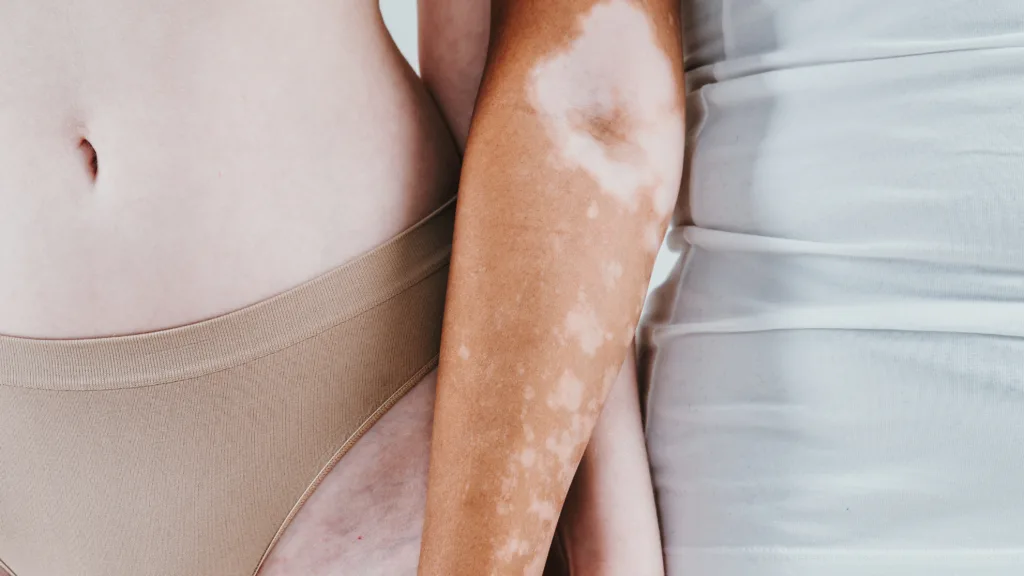
Vitiligo in intimate areas can affect both physical comfort and emotional wellbeing. Vitiligo may appear on any part of the body, including areas that are more private or sensitive. For many people, changes in these areas raise concerns about confidence, relationships and personal identity.
Experiences vary widely. Some people feel little impact, while others find vitiligo in intimate areas difficult to adjust to. This page offers reassurance, understanding and signposting to supportive resources.
Vitiligo and intimate areas
Vitiligo can affect areas such as the groin, genital skin, buttocks, breasts or other parts of the body that are usually private. From a medical perspective, vitiligo in intimate areas is no different from vitiligo elsewhere on the body. However, emotionally, it can feel more challenging due to privacy, sensitivity and the personal meaning attached to these areas.
Some people worry about:
- how vitiligo looks in intimate areas
- how a partner may respond
- changes in confidence or self‑esteem
- whether vitiligo affects physical health
Vitiligo is not contagious, not infectious and does not make intimate contact unsafe. While these facts can be reassuring, emotional concerns may still take time and support to work through.

Emotional impact and confidence
Vitiligo in intimate areas can affect the way someone feels about their body. Feelings such as embarrassment, shame or anxiety are common and understandable. These reactions are not a sign of weakness.
Confidence may be affected by:
- fear of being seen or judged
- worry about disclosure to a partner
- loss of a sense of control over one’s body
Support around visible difference and body confidence can be helpful. Organisations such as Changing Faces and Face Equality International offer resources focused on confidence, self‑esteem and living with appearance‑related difference.
Talking openly with a trusted partner can also help reduce fear and misunderstanding. Many people find that honest communication strengthens relationships rather than harms them.
Relationships and intimacy
Vitiligo does not affect sexual health or physical intimacy. However, anxiety or reduced confidence can influence how comfortable someone feels being close to another person.
Some people find it helpful to:
- decide how and when to talk about vitiligo with a partner
- keep explanations simple and factual
- focus on trust, comfort and emotional safety
There is no obligation to explain vitiligo unless you want to. Choosing what to share, and when, is entirely your decision.
If worry or avoidance around intimacy feels ongoing or distressing, emotional or psychological support may help.
Read more
Lifestyle


Visit our Member Magazine
Dating With Intention When You Have Vitiligo
Lifestyle

Visit our Member Magazine
“It felt like every time I went on a date, my vitiligo inevitably took center stage”
Lifestyle

Visit our Member Magazine
Dating with a visible skin condition
Lifestyle

Visit our Member Magazine
How Loving Myself First Became The Foundation To Others Loving Me To
Skin care and medical reassurance
The skin in intimate areas is often more sensitive. Gentle skin care, avoiding irritation and following general NHS skin‑health guidance is recommended. Vitiligo itself does not cause pain or damage to the skin in these areas.
If you notice symptoms such as soreness, itching or changes that do not seem related to vitiligo, you should seek medical advice, as these may be caused by other common skin conditions.
Trusted, UK‑based health information is available through the NHS.
Read more
Lifestyle
Visit our Member Magazine
Vitiligo and Intimate Areas: Honest Answers to the Questions You May be Afraid to Ask
Lifestyle

Visit our Member Magazine
Winter Skin Care and Vitiligo: A Gentle, Practical Guide
Research & Treatment

Visit our Member Magazine
Is there a link between Vitiligo and itchiness? To find out, we asked Dr Anthony Bewley a few questions…
Lifestyle

Visit our Member Magazine
‘Vitiligo doesn’t mean your wedding day will be any less perfect’.
Finding support
You are not alone in navigating sensitive or personal aspects of vitiligo. Many people find reassurance through shared experience, emotional support or professional guidance.
You may find it helpful to explore:
If vitiligo in intimate areas is affecting your wellbeing, relationships or quality of life, seeking support is a positive and important step.