

Is it vitiligo?
Have you noticed white or lighter patches on your skin and aren’t sure what’s causing them?
Many people first search for information after noticing their skin losing colour in small areas. These changes can have several possible causes, one of which is vitiligo. This page is designed for people who have not yet been diagnosed, to help you understand what you may be noticing, when to seek medical advice, and what the next steps might be. Typical questions people ask include:
Why is my skin losing colour?
What are these white patches?
Could this be vitiligo?
The first signs of vitiligo
Vitiligo often develops gradually, and early changes can be subtle. People commonly describe noticing these common signs and symptoms of vitiligo:
- White or lighter patches on the skin
- Loss of skin colour in small areas that become more noticeable over time
- Pale patches on the face, hands, feet, or around body openings
- Areas where the skin looks lighter but feels completely normal
- Patches that are not usually sore, or painful. Many people say skin can feel itchy, often before a new patch appears.
In some cases, these areas become more noticeable after sun exposure, when the surrounding skin tans but the lighter areas do not.
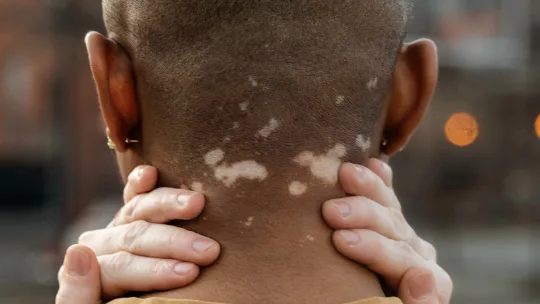
What causes white or pale patches on the skin?
There are several possible causes of white or lighter patches on the skin, and vitiligo is only one of them, so you should always seek a proper diagnosis with a healthcare professional.
Other causes can include:
Because of this, it’s important not to self‑diagnose based on appearance alone.

So, what is vitiligo?
Vitiligo is a condition in which patches of skin lose their pigment because the cells responsible for skin colour (melanocytes) stop functioning properly. Vitiligo:
- Is not contagious
- Is not caused by poor hygiene
- Does not cause physical pain
- Can affect people of all ages, skin tones, and backgrounds
- Can remain stable or change over time
You can read a clear overview of the condition on our What is vitiligo? page.
How is vitiligo diagnosed?
Vitiligo should be diagnosed by a healthcare professional, often a dermatologist. Diagnosis is based on:
- A visual examination of the skin
- Medical history
- Sometimes use of a Wood’s lamp, a special light that helps highlight pigment changes
Early or subtle vitiligo (particularly on the face) can be difficult to identify without specialist assessment.
If you’d like to understand what vitiligo can look like in more detail, see Signs and symptoms of vitiligo

If vitiligo is suspected
If vitiligo is suspected, your doctor may:
- Monitor changes over time
- Recommend first‑line treatments
- Refer you to dermatology for specialist assessment
Treatment options for vitiligo have expanded in recent years, and dermatology review is increasingly important. Accessing dermatology care for vitiligo can be difficult, but we are here to support you.
Finding reliable information
Searching online after noticing a change in your skin is completely natural. However, not all information found online is accurate or reassuring. The Vitiligo Society exists to provide trusted, evidence‑based information, support, and advocacy for people affected by vitiligo, whether you are still seeking answers or already have a diagnosis.