

Vitiligo & Sun Safety Hub
Why Sun Safety Matters When You Have Vitiligo
Vitiligo causes areas of skin to lose melanin, the pigment that gives skin its colour and provides some natural protection against ultraviolet (UV) radiation from the sun. Because vitiligo patches contain little or no melanin, they are significantly more vulnerable to sun damage and sunburn than normally pigmented skin.
While everyone should practise good sun safety, it is particularly important for people living with vitiligo. Protecting your skin can help prevent painful sunburn, reduce long-term skin damage and support overall skin health.
The good news is that having vitiligo does not mean you cannot enjoy sunny days. With the right precautions, you can confidently spend time outdoors while keeping your skin protected.

What Happens When Vitiligo Skin Is Exposed to the Sun?
Sunlight affects vitiligo skin differently because the white patches lack melanin. As a result:
- Vitiligo patches burn more easily and more quickly than surrounding skin.
- The contrast between pigmented and depigmented skin can become more noticeable if surrounding skin tans while vitiligo patches do not.
- Repeated sun damage may contribute to premature ageing of the skin and long-term UV damage.
Many people with vitiligo enjoy the appearance of a gentle overall tan because it can make some patches less noticeable. However, deliberate tanning should never come at the expense of skin health and protection. Consistent sun safety remains the priority.
Read more
Lifestyle


Visit our Member Magazine
Camouflage, Self-Tan or Foundation – Which One Is Right for Vitiligo Coverage?
Stories

Visit our Member Magazine
From hiding to honouring: My journey to loving the skin I’m in
Lifestyle

Visit our Member Magazine
4 strategies for embracing vitiligo & the summer
Lifestyle

Visit our Member Magazine
5 ways to build confidence when you live with vitiligo
Can Sunburn Make Vitiligo Worse?
Sunburn is more than just uncomfortable. The British Skin Foundation explains that vitiligo patches burn more easily because they lack melanin, the skin’s natural protection against UV rays.
In addition, skin injury can sometimes trigger new vitiligo patches through a process known as the Koebner phenomenon (sometimes called the “trauma response”). This is where new vitiligo develops in areas of the skin that have experienced injury, irritation, friction, burns or other trauma.
For some people, severe sunburn may therefore:
- Trigger inflammation in the skin.
- Increase the risk of new vitiligo patches developing in affected areas.
- Potentially contribute to disease progression.
This is one of the key reasons why preventing sunburn should be viewed as an important part of managing vitiligo.
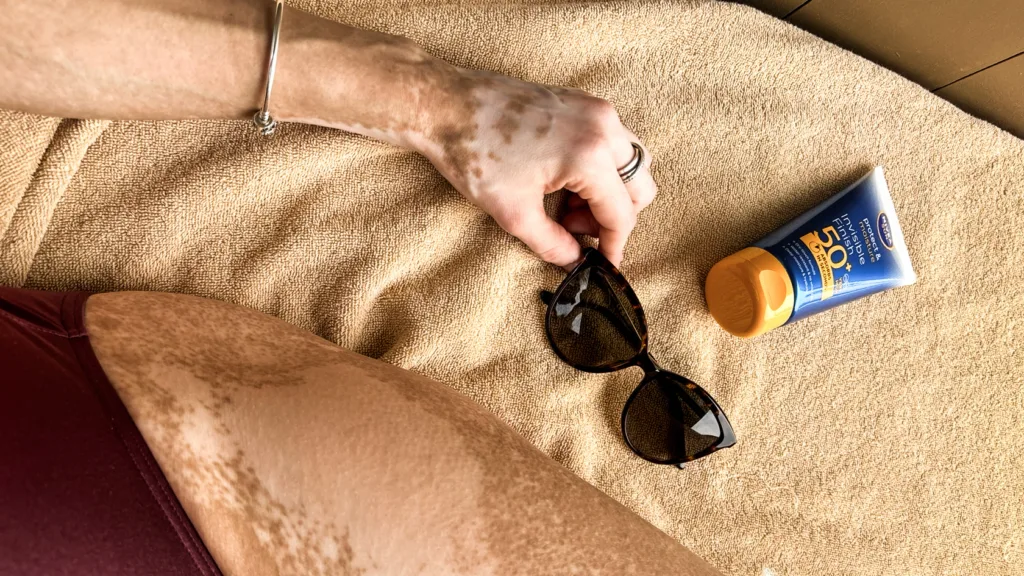
Can Sunlight Help Repigmentation?
Some people notice that their vitiligo appears to improve during the summer months, and sunlight can play a role in stimulating melanocytes (pigment-producing cells) in some individuals. This is one of the reasons that controlled forms of ultraviolet light are sometimes used in medical treatments for vitiligo. However, there is an important difference between:
- Controlled medical light therapy prescribed by a healthcare professional, and
- Unprotected exposure to natural sunlight.
While limited, sensible exposure to daylight may contribute to repigmentation in some people, too much sun exposure can quickly lead to sunburn in vitiligo patches because they lack melanin, the skin’s natural protection against UV radiation. Sunshine is not a recognised treatment for vitiligo in its own right, and deliberately sunbathing in the hope of restoring pigment is not recommended. Any potential benefits of sunlight must be balanced against the significant risk of sunburn and skin damage. The safest approach is to enjoy the outdoors while continuing to use appropriate sun protection.
Why Do Some People Think Their Vitiligo Looks Better in Summer?
There are several reasons:
- Some people experience a degree of natural repigmentation during sunnier months.
- Pigment often returns around hair follicles first, creating a speckled appearance of repigmentation.
- Increased confidence, wearing lighter clothing and spending more time outdoors can positively influence how people feel about the appearance of their vitiligo.
Read more
Lifestyle
Visit our Member Magazine
Our Guide to Booking a Vitiligo‑Friendly Holiday in the Sun
Lifestyle

Visit our Member Magazine
Vitiligo and sun safety: Skin care and sunscreen selection tips
Lifestyle

Visit our Member Magazine
7 ways your GP can help you manage your vitiligo
Stories

Visit our Member Magazine
“I Had To Work Hard at Accepting My Skin. Here’s How I Did It”
Choosing the Right Sunscreen
The NHS recommends that people with vitiligo use a high-protection sunscreen and take particular care in the sun. Look for:
- Broad-spectrum protection against both UVA and UVB rays.
- SPF 50 or higher, as recommended by the NHS.
- Good UVA protection (at least four stars where applicable).
- Water-resistant formulas if swimming or exercising.
Apply sunscreen correctly:
- Apply generously before going outdoors.
- Cover all exposed skin, including ears, hands, feet and the back of the neck.
- Reapply regularly, especially after swimming, sweating or towel drying. [
No sunscreen can provide complete protection, so it should always be used alongside other sun-safe measures.

Sun-Safe Habits Beyond Sunscreen
Sunscreen is only one part of effective protection. The NHS and British Skin Foundation all encourage a combination of practical sun-safety behaviours such as:
- Wearing protective clothing: Consider long-sleeved, lightweight tops. Long trousers, skirts or cover-ups. Wide-brimmed hats. UV-protective sunglasses.
- Seeking shade: Try to pend time in shaded areas during the strongest sunlight and use umbrellas, canopies or natural shade where available.
- Being mindful of reflective surfaces: Water, sand and even cloudy skies can still expose your skin to UV radiation. Sun protection remains important even when the weather doesn’t feel particularly hot.
Read more
Lifestyle

Visit our Member Magazine
Holidays, Photos & Vitiligo: Rewriting the Narrative
Lifestyle
Visit our Member Magazine
My Suncream Story and How It Became a Ritual and Not A Chore
Lifestyle

Visit our Member Magazine
Sun safety for children with vitiligo: A parent’s guide
Lifestyle

Visit our Member Magazine
Protecting Your Skin & The Importance of Sun Safety
What About Vitamin D?
Many people with vitiligo worry that avoiding sun exposure could affect their vitamin D levels. The NHS advises that people with vitiligo may be at increased risk of vitamin D deficiency if they avoid sun exposure. Vitamin D is important for healthy bones, teeth and overall health. The NHS recommends considering a daily supplement containing 10 micrograms (400 IU) of vitamin D, particularly when sun exposure is limited. If you are concerned about your vitamin D levels, speak with your GP for personalised advice.
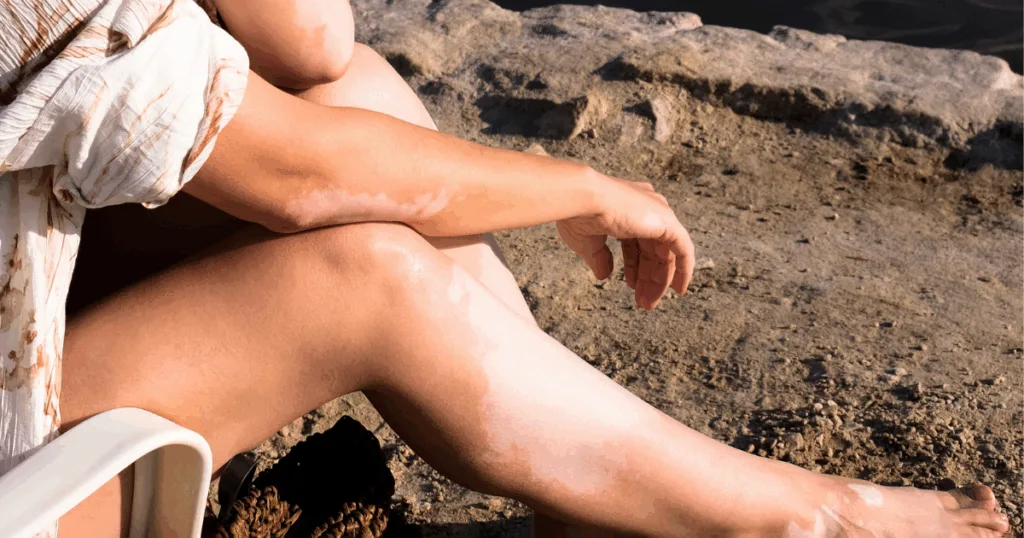
Skin Camouflage, Self-Tan and Summer Confidence
For some people, summer can bring mixed emotions. While warmer weather encourages lighter clothing and outdoor activities, it can also increase self-consciousness about visible patches.
There is no right or wrong way to feel about your vitiligo. Some people choose to display their skin proudly, while others prefer camouflage options. Both approaches are entirely valid.
Skin camouflage
The NHS recommends skin camouflage products as an option for people who wish to reduce the visibility of vitiligo patches. These products are specially colour matched to blend with surrounding skin and can be waterproof and long lasting.
Self-tan products
Many people with vitiligo use self-tanning products to reduce contrast between affected and unaffected skin during the summer months. Self-tan can be a useful cosmetic option for improving confidence and helping people feel more comfortable wearing summer clothing while avoiding the risks associated with sunbathing and UV exposure.
Building Confidence in Your Own Skin
Living with a visible difference can affect confidence and self-esteem. Changing Faces highlights that appearance-related concerns are often linked to confidence, particularly when people experience unwanted attention, stares or comments from others. The charity encourages people to:
- Focus on personal strengths and qualities beyond appearance.
- Practise positive self-talk.
- Challenge negative assumptions about what others are thinking.
- Build confidence gradually through real-life experiences.
- Access support from others with shared experiences.
Many people find that confidence grows over time. What initially feels daunting—such as wearing shorts, a swimsuit or short-sleeved clothing—often becomes easier with practice and self-acceptance.
Remember: protecting your skin is important, but hiding your skin is not a requirement. If you are still trying to find your confidence then why not join one of our online support sessions, where you’ll meet a friendly group of people all on their own vitiligo journeys who can offer you words of support and encouragement.
Quick Summer Checklist
Before heading outdoors:
✅ Apply SPF 50+ broad-spectrum sunscreen.
✅ Reapply regularly throughout the day.
✅ Wear protective clothing, a hat and sunglasses.
✅ Seek shade during stronger sunlight.
✅ Carry sunscreen when travelling.
✅ Stay hydrated.
✅ Consider vitamin D advice if regularly avoiding sun exposure.
✅ Use camouflage or self-tan products if they help you feel more confident.
✅ Enjoy the sunshine safely and on your own terms.

Key Takeaway
Having vitiligo does not mean avoiding summer. It means understanding how your skin responds to sunlight and taking sensible steps to protect it. By combining sunscreen, protective clothing, shade and confidence-building strategies, you can reduce the risk of sunburn, protect your skin’s long-term health and enjoy the warmer months safely and confidently.