

What you need to know about vitiligo
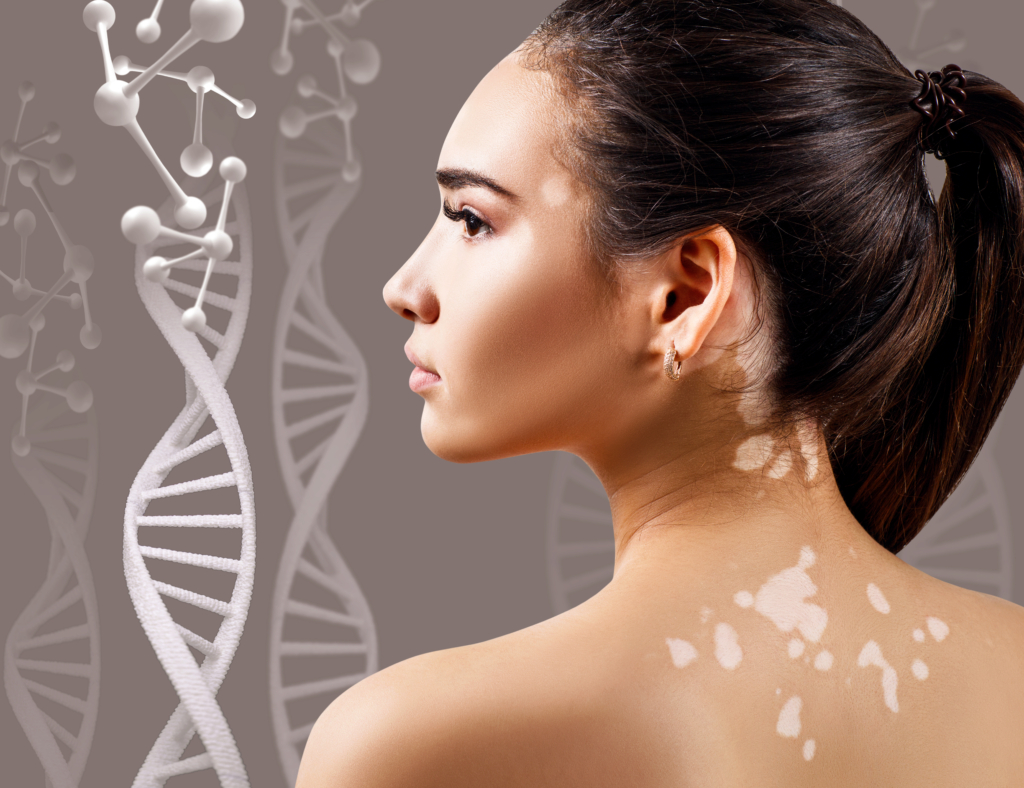
Vitiligo is a long‑term skin condition that causes patches of skin to lose their colour. It happens when pigment‑producing cells (called melanocytes) stop working or are destroyed. Vitiligo is not contagious and cannot be passed from person to person.
Vitiligo affects people of all ages, genders, and ethnic backgrounds. The appearance and progression of the condition vary widely from one person to another, which means everyone’s experience of vitiligo is different.
This page provides an overview of vitiligo and signposts you to more detailed information across the site.
What is vitiligo?
Vitiligo causes white or lighter patches to appear on the skin due to the loss of pigment. It may also affect hair, causing it to turn white or grey, and can involve mucosal areas such as the lips.
Vitiligo is usually described as an autoimmune condition, meaning the immune system mistakenly targets the body’s own pigment cells. The exact cause is not fully understood, and vitiligo is not caused by infection, diet, or poor health.
Who can get vitiligo?
Vitiligo affects around 0.5–2% of the global population. It can begin at any age, though many people develop vitiligo before the age of 30. The condition occurs in all skin tones. Because vitiligo affects pigment, it may be more noticeable on darker skin, but it can have a significant emotional and psychological impact regardless of skin colour.
How vitiligo can affect people
Vitiligo affects more than just the skin. While it does not usually cause physical pain or illness, it can affect confidence, self‑esteem, and mental wellbeing.
People with vitiligo may experience:
- Changes in appearance over time
- Anxiety or low mood linked to visibility or social reactions
- Uncertainty about progression or treatment options
Support, reliable information, and understanding can make a meaningful difference.
 Help us raise awareness by becoming a member of our Society
Is vitiligo the same for everyone?
No. Vitiligo varies in:
- Where it appears on the body
- How quickly it develops or spreads
- Whether it remains stable or changes over time
There are different types of vitiligo, and understanding the type you have can be helpful when discussing management or treatment options.
Read more
Research & Treatment


Visit our Member Magazine
The relationship between vitiligo and skin cancer
Research & Treatment

Visit our Member Magazine
Vitiligo and its link to other autoimmune diseases
Lifestyle

Visit our Member Magazine
Our dermatologists answer your vitiligo questions
Research & Treatment

Visit our Member Magazine
Vitiligo experts answer FAQs about the condition in live panel
How vitiligo is diagnosed
Vitiligo is usually diagnosed by a healthcare professional based on examination of the skin and medical history. In some cases, referral to a dermatologist may be needed.
Diagnosis is an important step in understanding your condition and discussing possible next steps.
Managing vitiligo
There is currently no cure for vitiligo, but there are treatment and support options that some people choose to explore. These may aim to restore pigment, slow progression, or help people feel more confident in daily life.
Choosing whether to pursue treatment is a personal decision, and not everyone with vitiligo chooses medical treatment.
→ Explore vitiligo treatments and support options
Research, trials, and clinical guidance
Ongoing research continues to improve understanding of vitiligo and develop new treatment approaches. Clinical guidance helps shape how vitiligo is managed within healthcare systems.
Some people may also choose to take part in clinical trials.
Learn more about vitiligo
You may find the following pages helpful:
Clinical guidance – evidence‑based standards of care
Understanding vitiligo – causes, immune factors, and common questions
Types of vitiligo – how vitiligo can differ between individuals
How vitiligo is diagnosed – what to expect from healthcare professionals
Vitiligo treatments – medical and supportive management options
Clinical trials and research – how new treatments are developed
Read more
Lifestyle

Visit our Member Magazine
Perfecting your skincare regime when you have vitiligo
Research & Treatment

Visit our Member Magazine
Study suggests chemical factors may play a key role in the occurrence of vitiligo
Research & Treatment

Visit our Member Magazine
What is the Koebner phenomenon and what do you need to know?
Research & Treatment

Visit our Member Magazine
Is there a link between Vitiligo and itchiness? To find out, we asked Dr Anthony Bewley a few questions…
Support from the Vitiligo Society
The Vitiligo Society provides trusted information, support, and community for people affected by vitiligo. Whether you are newly diagnosed or have lived with vitiligo for many years, you are not alone.
Help us campaign for more effective treatments to be made available
Read more
Lifestyle

Visit our Member Magazine
Finding a Dermatologist to help treat vitiligo
News
Visit our Member Magazine
#Letstalkvitiligo: Why Our New Campaign Makes a Difference
Research & Treatment
Visit our Member Magazine
Is there a link between Vitiligo and itchiness? To find out, we asked Dr Anthony Bewley a few questions…
Lifestyle

Visit our Member Magazine
Vitiligo – Truths and misrepresentations